
Air vs Sea vs Land Freight for B2B Operations
July 30, 2025
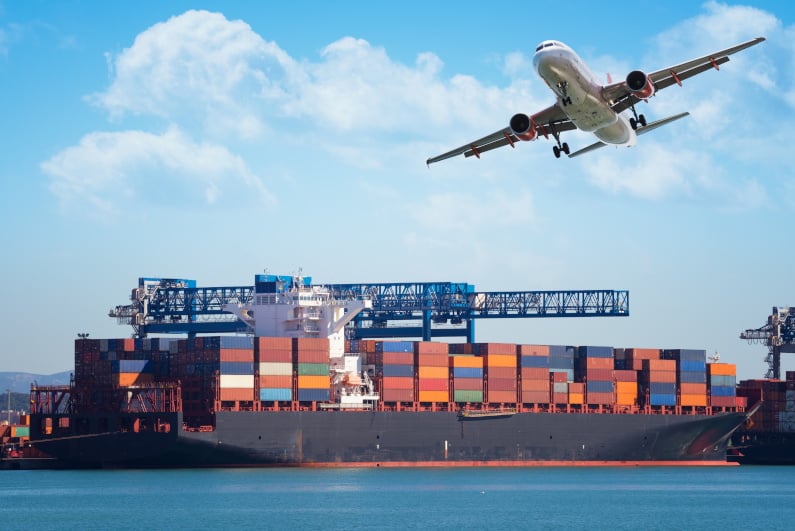
In today’s competitive and time-sensitive B2B market across the Gulf Cooperation Council (GCC), choosing the right freight mode can significantly impact your supply chain efficiency, cost management, and customer satisfaction. Businesses must consider a range of factors when selecting between air freight, sea freight, and land transportation, including speed, cargo volume, cost, and regulatory complexity.This blog compares the strengths and weaknesses of each freight mode and provides insights into which option may be best suited for different industries and shipment types across Saudi Arabia, UAE, and the broader GCC region.
Understanding Freight Modes in GCC Logistics
Air Freight
Air freight is ideal for time-sensitive, high-value, or lightweight cargo. In the GCC, it’s widely used for healthcare, electronics, and e-commerce sectors, especially for urgent cross-border shipping and international imports.
Sea Freight
Sea freight is the backbone of bulk cargo and heavy shipping in the region, particularly for sectors such as oil & gas, automotive, and construction materials. The port infrastructure in Saudi Arabia and the UAE supports large-scale international shipping and freight consolidation.
Land Freight
Land transportation is key for intra-GCC trade, including cross-border freight between Saudi Arabia, UAE, Kuwait, Bahrain, Oman, and Qatar. It’s often combined with air or sea freight in multimodal logistics solutions.Keywords integrated: air freight, sea freight, land transportation, cross-border shipping, international shipping, freight consolidation
1. Speed and Transit Time
Air Freight: Fastest Delivery
Air freight offers the fastest delivery times, typically 1–3 days for GCC-wide routes. This is ideal for B2B sectors like healthcare logistics, where air cargo ensures the timely arrival of critical products.
Use Case: A pharmaceutical company in Saudi Arabia shipping vaccines to clinics in the UAE would choose air freight to ensure temperature-sensitive goods arrive quickly.
Sea Freight: Economical but Slow
Transit times for sea freight can range from 7–30 days, depending on the origin and destination. While slower, it’s more suitable for bulk shipments that are not time-sensitive.
Use Case: A construction firm in the UAE importing steel from China might use ocean freight to balance cost and volume.
Land Freight: Flexible but Variable
Land freight within the GCC offers medium-speed delivery (2–7 days), but delays can occur at borders due to customs clearance issues.Use Case: A logistics company in Saudi Arabia transporting consumer electronics to Oman would leverage land transport for cost-effective and flexible logistics.
2. Cost Considerations
Air Freight: Premium Pricing
Air freight is the most expensive mode due to fuel surcharges, handling fees, and limited space. However, its high value-to-weight ratio makes it ideal for goods like electronics, spare parts, and medical supplies.
Sea Freight: Most Economical for Large Volumes
Sea freight forwarding for oil and gas companies and manufacturers is more cost-effective for bulk loads. Costs are based on container type (FCL/LCL) and port fees.
Land Freight: Mid-Range and Route-Dependent
Land transportation services cost less than air but more than sea, with pricing depending on distance, vehicle type, and border regulations.
3. Cargo Volume and Weight
Air Freight: Limited Volume and Weight
Airplanes have strict cargo size and weight limits. While air cargo logistics for healthcare in GCC is common, bulky or heavy items are often not viable.
Sea Freight: High Volume Capacity
Shipping containers (20ft, 40ft) allow massive volume and weight, making sea freight forwarding ideal for industries such as construction, automotive, and energy.
Land Freight: Moderate to High Capacity
Land freight trucks and heavy haulage logistics providers can handle a wide range of cargo, including oversized industrial equipment.
4. Customs Clearance and Documentation
Air Freight: Streamlined but Expensive
Air freight offers fast customs processes but often incurs higher customs clearance and handling fees. It’s crucial to work with a reliable customs broker.
Sea Freight: Detailed Documentation Required
Customs documentation for ocean freight is more complex, especially for bulk cargo. Ports like Jeddah, Dammam, and Jebel Ali require thorough compliance checks.
Land Freight: Prone to Delays
Border clearance is a challenge in land transportation across GCC due to varied regulations and documentation requirements.
5. Industry-Specific Use Cases
Healthcare and Pharma
Best fit: Air Freight
Speed, cold chain needs, and regulatory compliance make air the best choice.
Oil & Gas, Construction, and Petrochemicals
Best fit: Sea Freight
Bulk cargo, heavy equipment, and long lead times favor ocean shipping.
E-Commerce and Retail
Best fit: Air + Land Freight
Fast delivery and door-to-door service combine air freight with local land transport for last-mile efficiency.
Manufacturing
Best fit: Multimodal Logistics
Combining sea freight for inbound raw materials and land freight for intra-GCC distribution..
6. Environmental Impact and Sustainability
Air Freight: Highest Emissions
While efficient, air freight has the largest carbon footprint. It’s best reserved for essential or urgent cargo.
Sea Freight: Relatively Greener per Unit
Despite long transit times, sea freight has a lower per-unit carbon output, especially when using freight consolidation.
Land Freight: Moderate Impact
Emissions depend on truck type and fuel source. There’s growing interest in electric fleet logistics management for sustainable operations.
7. Flexibility and Route Availability
Air Freight: Limited by Flight Schedules
Air cargo depends on airport access and flight schedules. While ideal for charter services, it’s not as flexible as land.
Sea Freight: Dependent on Port Access
Not every destination is port-friendly, making onward land transport necessary. Also subject to port congestion.
Land Freight: Highly Adaptable
Land transportation allows door-to-door delivery across GCC. With logistics partners offering fleet logistics management, it ensures full route flexibility.
8. Integration with Warehousing and Distribution
For B2B operations, freight isn’t the end, distribution and warehousing play vital roles. Integrated logistics services allow companies to pair freight with:
- Temperature-controlled storage for food and pharma
- Real-time inventory tracking
- Cross-docking and last-mile delivery
This end-to-end capability is essential for companies seeking freight forwarding with warehousing services or contract logistics providers in the GCC.
Conclusion: Choosing the Right Freight Mode for Your Business
There’s no one-size-fits-all answer in GCC B2B logistics. The choice between air, sea, or land freight depends on:
- Cargo type and volume
- Delivery timeline
- Budget constraints
- Regulatory and customs complexity
- Industry requirements
Al Barrak Group, as a trusted logistics provider in Saudi Arabia and the UAE, offers multimodal transport solutions, freight forwarding, and customs clearance support designed for optimal speed, cost, and reliability. Whether you’re a manufacturer, importer, or distributor, Al Barrak delivers flexible and integrated freight strategies that align with your business goals.
Explore the key differences between air, sea, and land freight for B2B logistics in the GCC. Learn how each freight mode impacts transit time, cost, cargo capacity, regulatory complexity, and environmental sustainability. Discover industry-specific use cases across Saudi Arabia, UAE, and the broader Gulf region to help you choose the optimal logistics strategy for your business.