
Warehouse Automation Trends Transforming Saudi Arabia’s Logistics Industry
August 26, 2025
Introduction
Saudi Arabia’s logistics sector is undergoing a massive transformation, driven by Vision 2030 and the Kingdom’s strategic ambition to become a global logistics hub. With increasing demand for fast, accurate, and scalable supply chain operations, warehouse automation has emerged as a game-changer for logistics service providers, manufacturers, and e-commerce businesses.
From robotic picking systems to AI-powered inventory management and automated storage and retrieval systems (AS/RS), automation is redefining how warehouses operate, reducing costs, and enhancing efficiency. In a country where demand for warehousing space is growing rapidly, particularly for cold chain logistics, industrial goods, and e-commerce fulfilment, automation isn’t just an option; it’s a competitive necessity.
In this article, we explore the top warehouse automation trends shaping Saudi Arabia’s logistics industry, the challenges of adoption, and how companies like Al Barrak Group are helping businesses transition to smarter warehousing.
The Rise of Automated Warehousing in Saudi Arabia
Saudi Arabia’s logistics infrastructure is expanding at an unprecedented rate. Factors driving warehouse automation include:
- Rapid E-commerce Growth: More online orders demand faster, more accurate fulfilment.
- Industrial Diversification: Manufacturing and petrochemical sectors require efficient material handling.
- Cold Chain Expansion: Food, pharmaceuticals, and medical supplies need precise, temperature-controlled automation.
- Labor Optimization: Automation reduces dependency on manual labor while improving workplace safety.
Key Warehouse Automation Trends in Saudi Arabia
1. Automated Storage and Retrieval Systems (AS/RS)
AS/RS use computer-controlled systems to automatically place and retrieve goods from storage locations.
- Benefits: Maximizes space utilization, improves accuracy, and reduces retrieval times.
- Use Case: High-density storage for FMCG, automotive parts, and cold chain warehouses.
2. Robotics in Picking and Packing
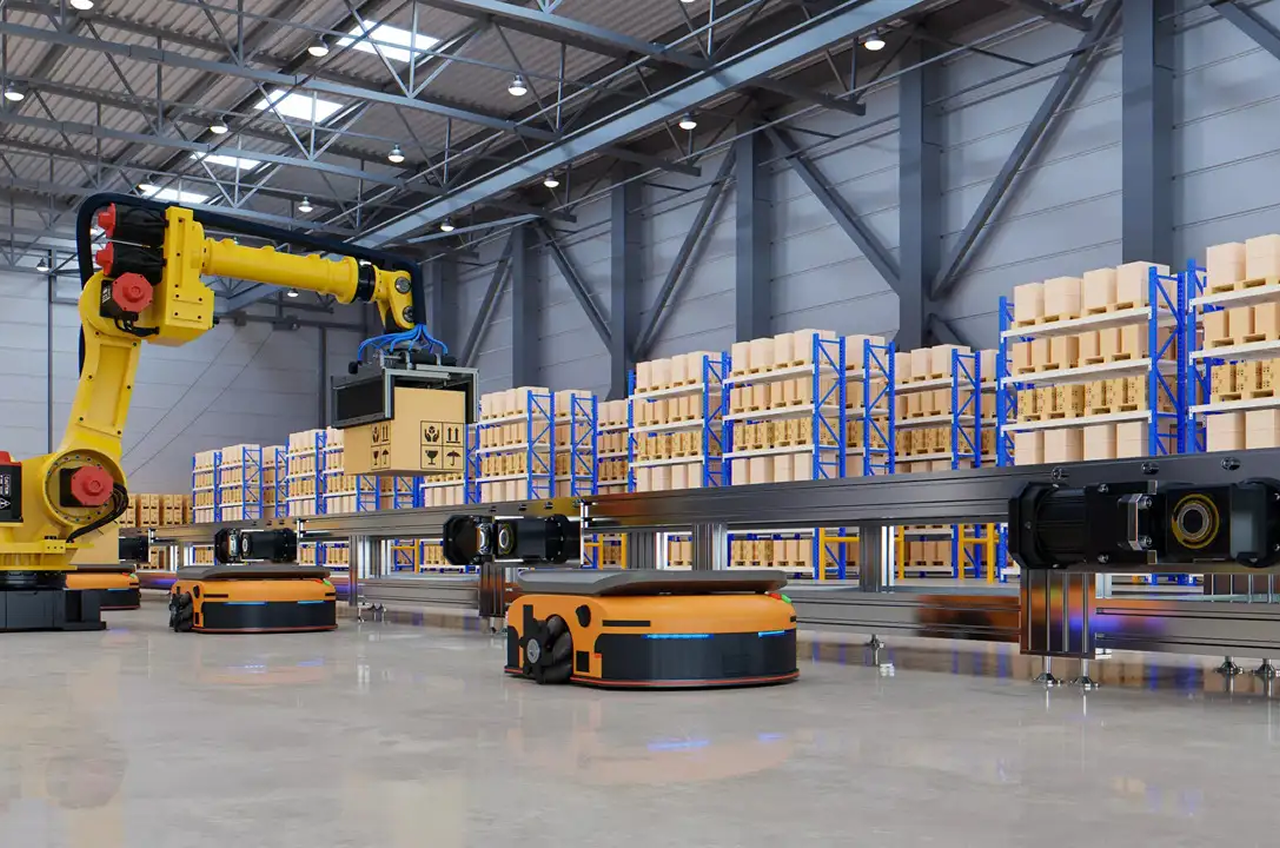
Robotic arms and autonomous mobile robots (AMRs) streamline order picking and packaging.
- Benefits: Increases speed, reduces errors, and operates 24/7.
- Use Case: E-commerce fulfilment centers serving Riyadh, Jeddah, and Dammam.
3. Internet of Things (IoT) for Real-Time Tracking
IoT sensors monitor inventory levels, equipment performance, and environmental conditions.
- Benefits: Enhances supply chain visibility and predictive maintenance.
- Use Case: Monitoring temperature-sensitive shipments in cold storage facilities.
4. AI-Driven Inventory Management
AI algorithms forecast demand, optimize stock levels, and reduce carrying costs.
- Benefits: Improves order accuracy and prevents stockouts or overstocking.
- Use Case: Retail distribution warehouses in Saudi Arabia’s central logistics hubs.
5. Conveyor and Sortation Systems
Automated conveyor belts and sorting machines speed up goods movement within warehouses.
- Benefits: Enhances throughput and reduces manual handling risks.
- Use Case: Logistics hubs handling bulk shipments for manufacturing clients.
6. Voice-Picking and Wearable Technology
Hands-free systems guide workers through picking tasks using voice commands or wearable displays.
- Benefits: Improves productivity and minimizes errors.
- Use Case: Large warehouses with complex SKUs and fast-moving goods.
7. Drone Technology for Stocktaking
Drones scan barcodes and inventory levels without human intervention.
- Benefits: Speeds up audits and reduces operational downtime.
- Use Case: Large-scale industrial and high-bay storage warehouses
8. Automated Guided Vehicles (AGVs)
AGVs transport goods between storage areas, packing stations, and docks without human drivers.
- Benefits: Reduces labor costs and increases safety.
- Use Case: Automotive and heavy equipment spare parts distribution centers.
9. Warehouse Management Systems (WMS) with AI Integration
Advanced WMS platforms integrate automation hardware, AI analytics, and real-time data.
- Benefits: Centralizes control over operations and optimizes workflows.
- Use Case: Multi-tenant warehouses serving multiple industries.
10. Sustainable and Energy-Efficient Automation
Automation technology is becoming greener, with energy-efficient conveyors, solar-powered AGVs, and recyclable packaging automation.
- Benefits: Aligns with sustainability goals and reduces operational costs.
- Use Case: Facilities meeting Vision 2030 environmental targets.
Benefits of Warehouse Automation in Saudi Arabia’s Logistics Sector
- Faster Order Fulfilment:Reduces lead times from hours to minutes.
- Improved Accuracy: Minimizes picking and packing errors.
- Space Optimization: Maximizes vertical and horizontal storage.
- Reduced Labor Costs: Automates repetitive, labor-intensive tasks.
- Scalability: Supports seasonal and long-term growth.
- Enhanced Safety: Reduces workplace injuries from manual handling.
Challenges of Implementing Warehouse Automation
- High Initial Investment: Automation requires significant capital expenditure.
- Technology Integration: New systems must work seamlessly with existing WMS and ERP platforms.
- Skilled Workforce Requirement: Staff need training to operate and maintain automation systems.
- Infrastructure Readiness: some warehouses require retrofitting to accommodate automation
Al Barrak Group’s Role in Driving Warehouse Automation in KSA
As a leading logistics service provider in Saudi Arabia, Al Barrak Group offers:
- Warehouse Design & Automation Consulting: Assessing needs and designing optimized layouts.
- Implementation of Automation Solutions: From AS/RS to robotics and IoT integration.
- Cold Chain Automation Expertise: Specializing in food and pharmaceutical storage automation.
- WMS Integration: Ensuring seamless control over automated workflows.
- Ongoing Support & Maintenance: Maximizing uptime and ROI.
Case Study: E-Commerce Fulfilment Automation in Riyadh
Challenge:
A fast-growing e-commerce retailer faced order fulfilment delays due to manual picking.
Solution:
- Installed robotic picking arms and AI-driven WMS.
- Integrated conveyor and sortation systems to speed up packing.
- Implemented IoT sensors for real-time inventory tracking.
Result:
- Order accuracy improved to 99.8%.
- Processing time reduced by 60%.
- Labor costs reduced by 30% within one year.
Future Outlook for Warehouse Automation in Saudi Arabia
The future is shaped by:
- Increased Government Investment – Vision 2030 logistics initiatives.
- Cross-Border Integration – GCC-wide automated supply chains.
- Sustainability Focus – More energy-efficient, eco-friendly automation systems.
AI-Driven Decision-Making – Predictive analytics for warehouse optimization.